Moscow Polytech Graduate and Lynk & Co Automotive Designer Shares His Career Journey
Andrey Kirichenko, Senior Exterior Designer at Lynk & Co, gave an interview to the Chinese Cars online portal. The experienced automotive designer spoke about his first steps in car design, his university studies, internships and career journey.
Lynk & Co is a premium Chinese-Swedish automotive brand established in 2016 by the Chinese automotive group Geely in cooperation with the Swedish company Volvo.
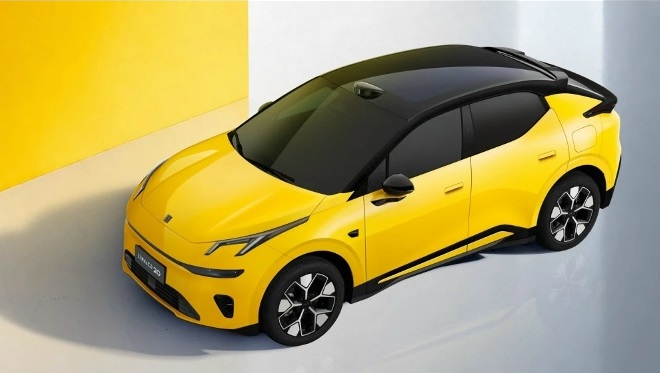
Andrey Kirichenko is a graduate of Moscow State University of Mechanical Engineering (MAMI), now Moscow Polytechnic University. After studying automotive design, Andrey worked at NIO and Renault. He has now been working at Lynk & Co for almost five years and has contributed to the development of the 07 sedan, the facelift of the Z20 electric vehicle (pictured above), and the 07 GT shooting brake.
Below are excerpts fr om the interview focusing on Andrey’s university years. Read the full interview here.
Many people become interested in cars as children, but my story was a little different. I studied art and graphic design, and when it was time to apply to university and choose a profession, I decided to study product design. Of course, I occasionally came across car sketches, but I did not even know that it was possible to study automotive design in Russia, so I had never really considered it as a career path. Shortly before making my final choice of university, I happened to turn on the TV and saw a programme about automotive design in Russia. It also featured universities offering relevant programmes. It was a revelation to me that such institutions even existed. I immediately became interested in the idea, attended an Open Day at MAMI (Moscow Polytech) and decided that this was wh ere I wanted to study. What particularly attracted me was the idea that automotive design could be considered the pinnacle of product design.
— What were the distinctive features of studying automotive design at the university? How important is specialised education for an automotive designer?
— I think it is difficult to enter the automotive design industry without understanding the specifics of the process, even if you already have experience in product design. Of course, much of the practical experience of creating a car is gained during internships, but a solid foundation is essential. Later on, no one is going to teach you how to use Photoshop, convey perspective in an automotive sketch, create a render or build a 3D model.
You need to know all these things, and MAMI (Moscow Polytech) provided this knowledge. Another major difference between the university and European institutions such as Pforzheim is its strong engineering foundation. The everyday work of an automotive designer is not limited to sketching and creativity. These account for roughly 20% of the vehicle development process. The rest involves constant collaboration with engineers, 3D modellers and marketing specialists. After all, the ultimate goal is to turn a sketch into a real vehicle that is practical and useful for people.
It is very helpful for a designer to understand processes such as metal stamping when developing a realistic design. It also makes it easier for the people around you to work with you when you understand these processes. I have spoken to many people who studied at other Russian and European universities. They described their automotive design education as being similar to art school, with a strong emphasis on creativity but without a technical foundation. As a result, they had to acquire this knowledge later, while already working in the industry.
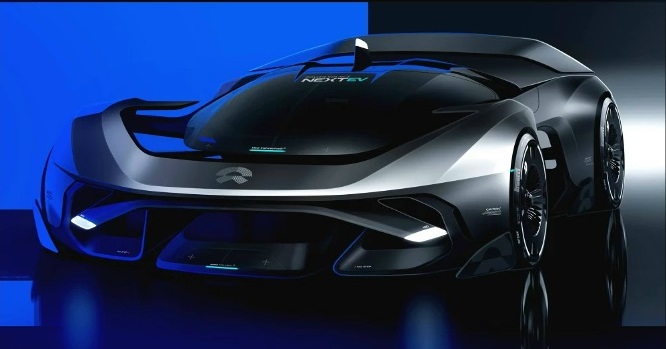
— Could you tell us more about your graduation project with NIO?
— First, it is worth explaining what a graduation project at MAMI (Moscow Polytech) was expected to involve. Mine was part of a Master’s programme, and Master’s graduation projects were required to address a specific and relevant industry challenge. When you graduate from the Master’s programme at MAMI (Moscow Polytech), you receive an engineering qualification. For example, my Master’s diploma does not say ‘Automotive Design’ but ‘Ground Transport Technological Complexes’.
At the time, NIO was actively working on autonomous vehicles. The company had a dedicated studio in California focused exclusively on autonomous driving technologies, wh ere software was developed and tested. NIO then came up with an interesting idea — to explore the issue of public distrust of autonomous vehicles. At the time, the technology was still relatively new, as autonomous cars had only recently begun to appear on such a large scale in China.
NIO was also competing in Formula E, which was still a relatively new racing series at the time. The company achieved considerable success, winning both individual races and championships.
My project involved designing a car that could operate both fully autonomously and under human control. It also included the concept of a racing competition for semi-autonomous vehicles. In theory, these race cars could compete against each other both autonomously and with human drivers.
Such a competition could provide an excellent opportunity to demonstrate the technology and show that an autonomous vehicle can compete with a human driver even under the challenging conditions of a racetrack.
When I returned to NIO as an employee, I was asked to spend another two or three months working on the project and redesign the car to make it more suitable for production.
Read more on the website.
Photo: Китайские-автомобили.рф