Moscow Polytech Professor Explains How to Boost Transport Efficiency in Federal Media Interview

Moscow Polytechnic University has developed a system that reduces truck fuel consumption by 10-25%. The technology is based on adaptive algorithms for engine and gearbox control that take into account the real-world operating conditions of a specific vehicle. Professor Andrey Keller, Doctor of Engineering Sciences, discussed these new approaches to improving transport efficiency with the «Rossiyskaya Gazeta» newspaper.
"We have created a solution for the embedded software in the engine control units of commercial vehicles. The optimization of the firmware is based on an analysis of the technical features of a particular truck and its operating conditions—such as the climate zone, typical routes, cargo weight, and surrounding traffic," Keller explained.

The system works on a SaaS model and is designed for trucks that are already in service. The updated software adjusts the operation of the engine and gearbox control units to specific conditions to reduce operational costs. The guaranteed fuel savings are 10%, with maximum savings reaching 25%.

Beyond fuel economy, the Transport Faculty at Moscow Polytech is working on other technologies to improve efficiency. Engineers have developed an automatic differential lock control system that enhances vehicle mobility. A concept for decentralized tire pressure regulation and a real-time road condition assessment system have also been created.
A separate research focus is electric brake systems without hydraulics. Commissioned by the KAMAZ Engineering Center, the university has already manufactured and tested prototypes of an electromechanical brake actuator. Its control algorithms have been developed and have passed bench testing. The next stage is to refine the system and conduct vehicle integration tests.

Faculty scientists are also working on unmanned vehicle technologies. A research platform based on a Volkswagen e-Golf and a control system for unmanned tractors has been created. A scientific and methodological framework for digital route synthesis has been developed and has been verified on a test route. The team is currently creating datasets for training machine vision and developing a methodology for road scene localization using audio information.
Another promising area is a control strategy for electromechanical powertrains in electric and hybrid vehicles. This will optimize energy consumption based on driving modes and operating conditions.
The developments of the Transport Faculty are part of the educational model at Moscow Polytech, which integrates research, industry, and specialist training. Students participate in creating technologies from the prototyping stage to the finished product, working directly with industrial partners.
"We have shifted from teaching to creating ready-made technological products. Our task is not just to provide knowledge, but to equip students with the competencies to solve specific industrial tasks immediately after graduation. This is especially important for new regions that require accelerated recovery and development of production facilities," stated Vladimir Miklushevsky, Rector of Moscow Polytechnic University.
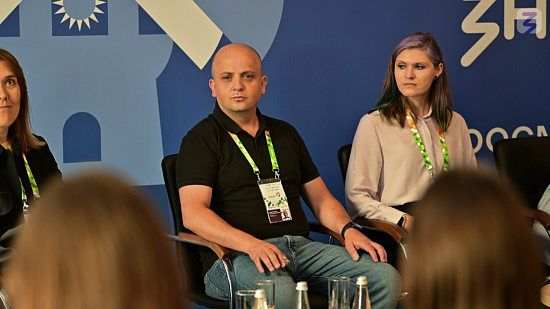
This approach enables the rapid closure of personnel and technological gaps in industry. Under the guidance of experienced instructors and industry representatives, students go through the entire cycle—from concept development to creating pre-production prototypes. The university presented this work experience at the II International Conference "Azov Development Forum" in Mariupol.