Priority 2030: New Alloys for Aircraft Engines Will Make Components Lighter Without Sacrificing Strength
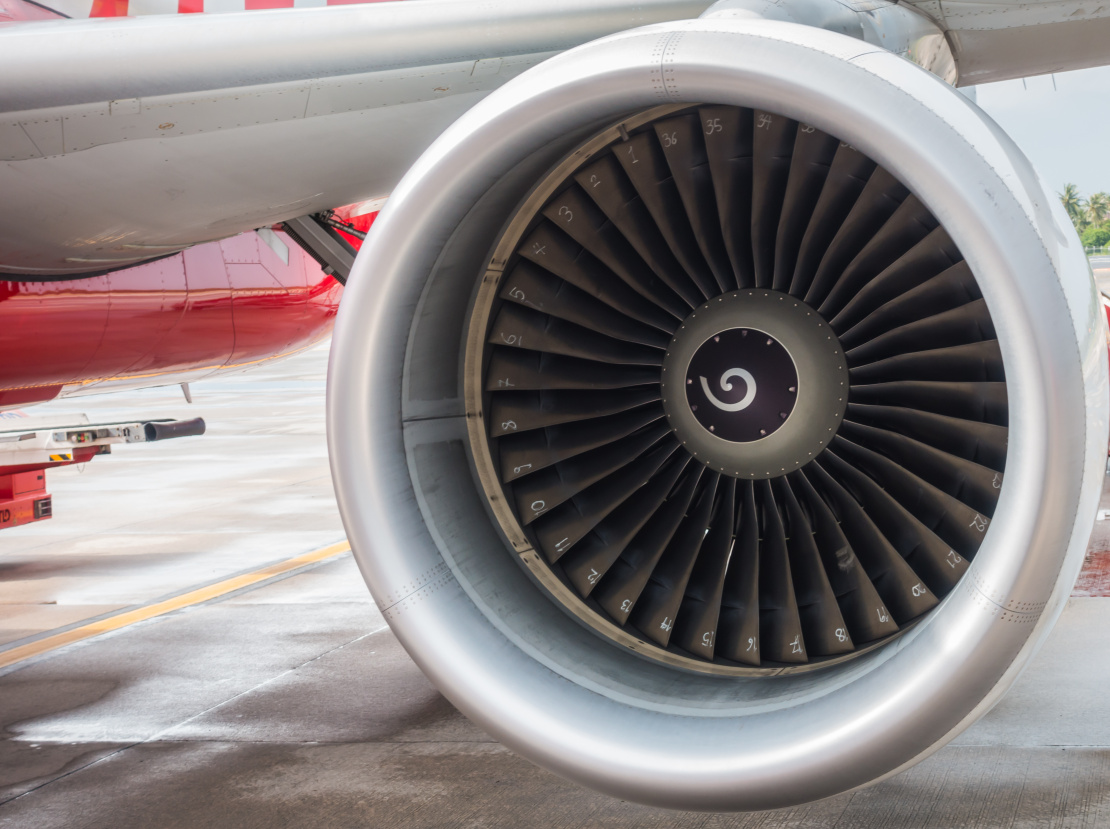
Researchers from Moscow Polytechnic University, in collaboration with scientists from NUST MISIS, are developing next-generation powder materials for 3D printing turbine components. The project focuses on creating new powder alloys for manufacturing aircraft and rocket engine parts using Selective Laser Melting (SLM) technology. The goal is to reduce component weight while simultaneously increasing their strength — a challenging task from a materials science perspective. The research is supported by a P. L. Kapitsa Grant awarded by Moscow Polytechnic University as part of the federal Priority 2030 program.
The challenge lies in the physical properties of existing materials. The titanium alloy Ti-6Al-4V, which has long been the industry standard, can withstand loads of up to 900–1,000 MPa while maintaining a relatively low density of 4.4 g/cm³. However, it cannot match the high-temperature performance of nickel-based superalloys. Aluminum alloys are even lighter but lose their strength at temperatures above 600°C, which are typical for turbine blades and combustion chambers. Finding a material that is simultaneously lightweight, strong, and heat-resistant remains a major engineering challenge.
According to the researchers, the new titanium aluminide-based alloys are expected to improve all three key characteristics simultaneously. Their density is projected to decrease to 4.0–4.2 g/cm³, their strength to exceed 1,100 MPa, and their operating temperature to rise above 650°C. Components made from these materials could be 10–15% lighter while maintaining the same level of reliability, leading directly to lower fuel consumption and longer service life in aerospace applications.
“Titanium aluminides have long been recognized as a promising class of materials. However, manufacturing complex-shaped components from them using conventional methods is extremely difficult because the alloy is brittle at room temperature and difficult to machine. Additive manufacturing eliminates this limitation: the laser fuses the powder layer by layer according to a digital model, making component geometry independent of complex manufacturing processes while reducing material waste to as little as 5%,” says Georgy Markov, PhD in Engineering and project leader.
The researchers will optimize laser printing parameters for each new alloy using machine learning. Algorithms trained on thermodynamic simulations and experimental data will predict the optimal laser power, scanning speed, and layer deposition strategy for each specific alloy. This approach will significantly reduce the number of costly physical experiments, as a single round of testing on industrial equipment can take several days and consume large amounts of expensive powder material.
Over the next three years, the team plans to progress from synthesizing the first experimental batches of powders to producing prototype components, including fasteners and brackets, ready for testing by industrial partners. The project’s scientific findings will be published in international peer-reviewed journals and presented at industry conferences. Potential industrial partners for future implementation include enterprises of the United Engine Corporation (UEC) and Roscosmos.
Header photo: https://www.magnific.com/ru