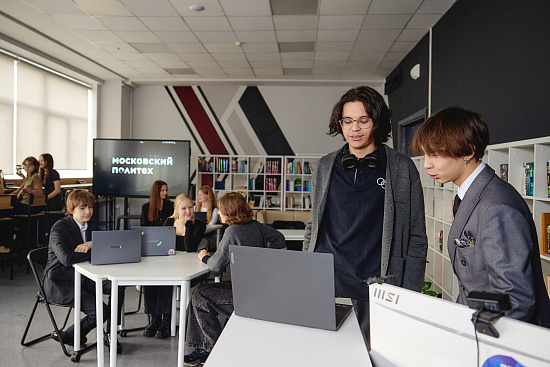
Moscow Polytech Student Discusses Her Graduation Project: The GAC 69 Nuclear Concept Car
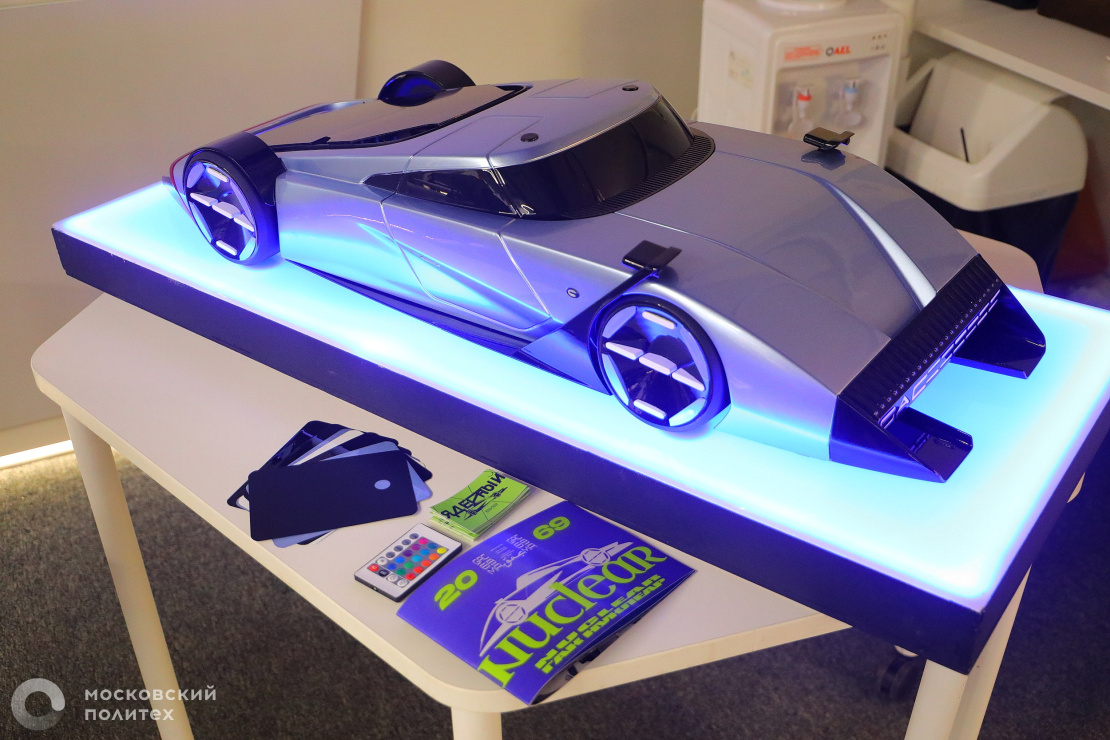
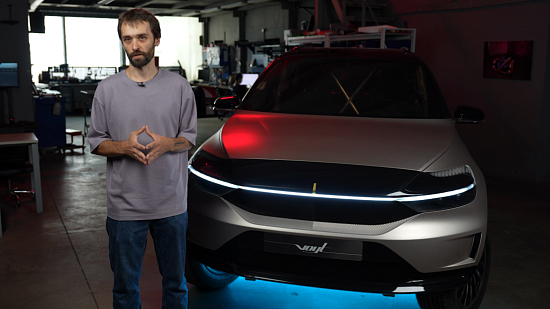
Maria Magdalanova, a master's student at Moscow Polytechnic University, has created the GAC 69 Nuclear concept car. The project served as her bachelor's graduation thesis in Transport and Industrial Design at Moscow Polytech. In an interview with correspondent Denis Bobylev on the "Chinese Cars" internet portal, the student spoke about the process of creating the car of the future and the core ideas behind its design.
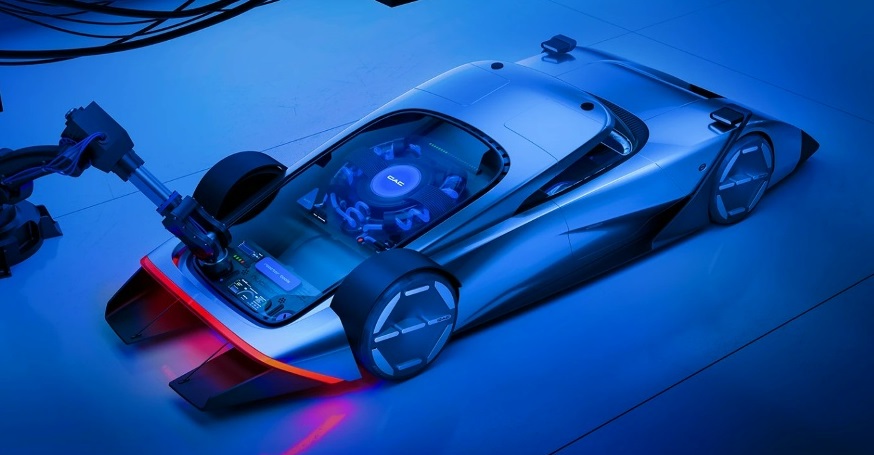
Maria Magdalanova: The project emerged at the intersection of three core ideas: a social manifesto, conceptual vandalism and durability. I wanted to rethink the familiar consumption model, in which one has to pay for access to resources. That is how the image of a car with a thorium molten-salt nuclear reactor, which becomes a source of energy in its own right, came about.
Denis Bobylev: How does the creation of a graduation project begin?
Maria Magdalanova: Creating a graduation project involves several stages. I was lucky with my academic supervisor, who clearly allocated time for each stage so that I stayed within the deadlines. Although, looking ahead, I finished the model the night before submission.
The first stage is searching for and choosing a concept, as well as studying all existing material. My topic was quite demanding and required delving into the engineering side. I wanted to create not just a design, but also to work through the components of the reactor. The concept was to create a nuclear power unit that is open and visually accessible for observation. People are often afraid of what they do not understand.
By revealing a complex technology, I sought to make it more understandable and tangible, to turn the unknown into an object of study rather than fear. It is important to me that the complexity of the engineering device is not hidden behind a shell, but becomes part of the design itself.
The initial research stage, which runs from September to October, includes choosing the topic and the brand, analysing competitors and analogues, and so on. Next comes the design search stage. First, you need to find and understand the aesthetic, to draw inspiration from something. Websites like Pinterest help with this. Only then does the sketch search begin, which in Russia is also called sketching. This stage lasts until the end of December, and I made a great many sketches — a whole folder of them.
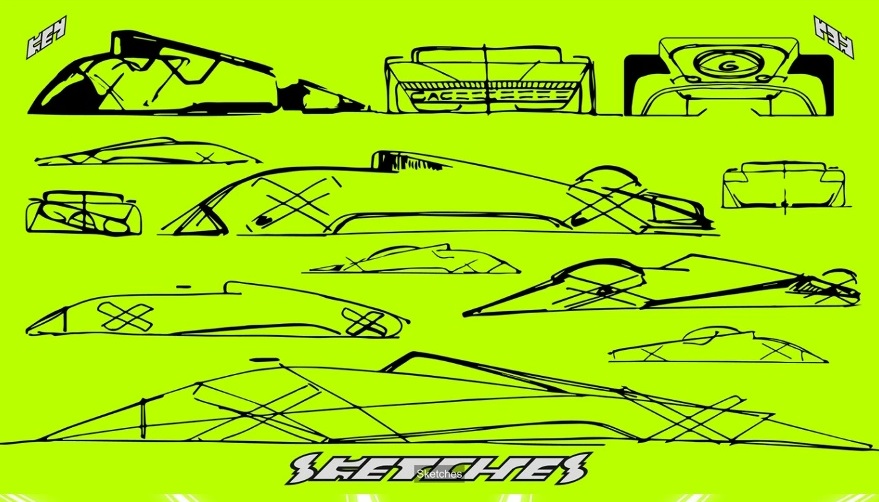
Every week there is a selection of sketches and identification of promising directions worth developing further. One of my main criteria was the recognisability of the silhouette: I wanted to achieve a shape that could be remembered in a few seconds and subsequently reproduced in just a few lines.
In the end, I chose a direction based on several key graphic elements: a descending shoulder line, a line crossing the wheel arch and forming the characteristic geometry of the side panel, and a descending roofline. Together they create a dynamic, elongated silhouette that becomes the basis of the car's visual identity. Then comes the layout development stage, when we prepare drawings indicating precise volumes, width, height, angles and so on.
After that, I moved on to the 3D model of the car in the Alias programme. This is very difficult, because due to a lack of experience it often turns out that a car drawn in 2D no longer looks as beautiful and clear when transferred to a three-dimensional view. An understanding of volumes comes with experience. Ergonomics must not be forgotten either. A person needs to be able to sit comfortably in the cabin as well. In the end, all of this has to be taken into account while preserving the original idea. This is probably the hardest part of the project.
Denis Bobylev: And when does the work on the physical model itself begin?
Maria Magdalanova: Before that, the 3D work has to be completed. That was in progress right up until the end of April. And once the model is fully ready, the production of the physical model begins. Here, as in the working process, a designer cannot do everything from the first vision to the models single-handedly. There are separate roles for that.
I found people who produced various elements for me. The main part of my model is milled from wood. This is an effective choice, because the surfaces will not "warp" after assembly. Some parts were 3D-printed in plastic at the university, after which I spent a long time finishing them in the model workshop. Then a professional painter primed and painted the parts in several stages.
After that, the painter, my thesis supervisor and I finished assembling the model. I separately made a glowing table base to emphasise all the highlights and reflections. And at literally 12 o'clock at night I brought it to the university right before the defence. In the end, many parts did not turn out quite as I had originally wanted, but it was my first full-scale model and a very important experience.
Denis Bobylev: As the youngest generation, how do you see current car design and its future?
Maria Magdalanova: Cars generate enormous interest because of the progress that has been achieved in this field over a hundred years. At the same time, it seems to me that the phrase "things used to be better" is not always fair. It is true that concept cars used to be bolder, but today a great deal depends on the objectives of a particular brand.
Right now, car design is at a very interesting stage of transformation. On the one hand, electrification and the development of new technologies give designers more freedom. On the other, there is a risk that cars will become too similar to one another. It seems to me that one of the main tasks of contemporary car design is to preserve individuality and the emotional component. After all, a car is not only a means of transport, but also a cultural object, a reflection of its time and a way for a person to express themselves.
As a representative of the younger generation of designers, I want to see the future of the industry as more experimental and bold. I am interested not simply in perfecting existing forms, but in asking questions about what a car can be in general, what role it will play in a person's life and how its interaction with the world around it will change.