Moscow Polytech PhD Student Develops Tractor's Suspension Calculation Method Using Standard Production Components
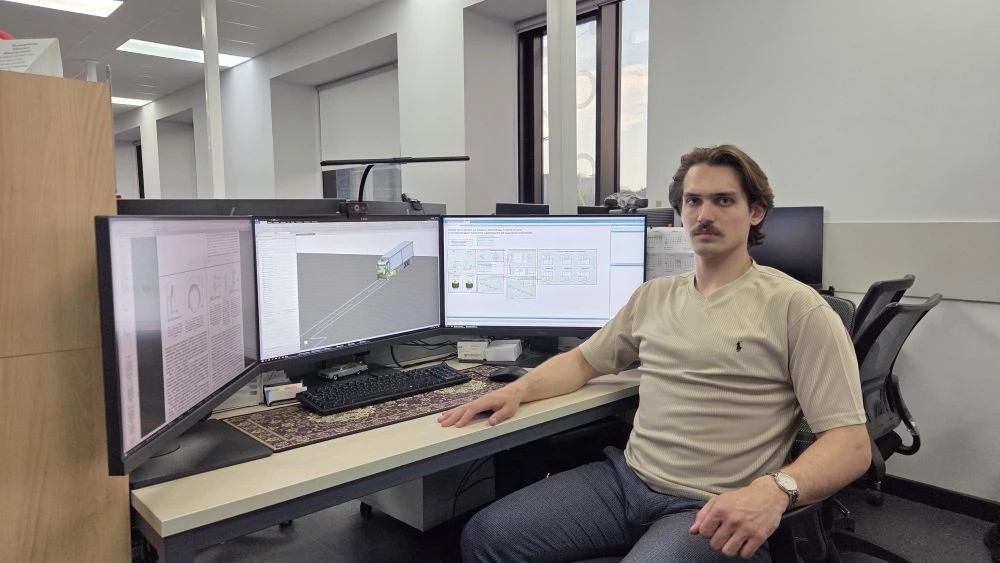
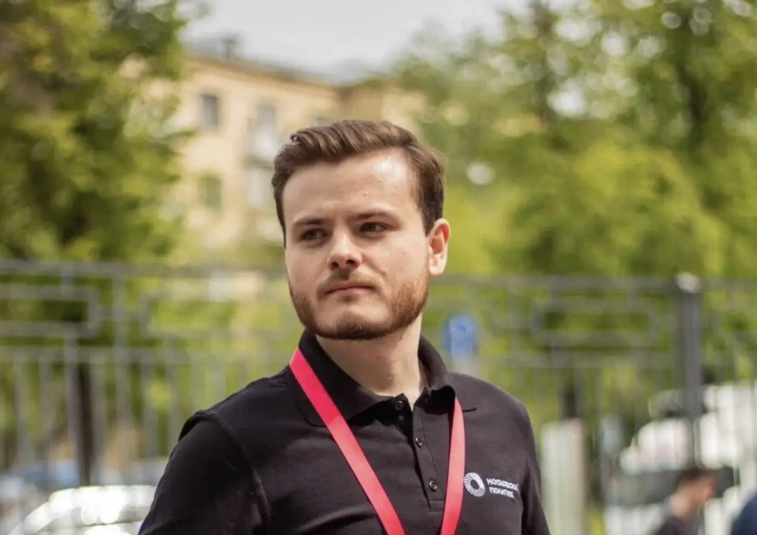
Mikhail Chetverikov, a Moscow Polytechnic University PhD student and a recipient of a Russian Presidential scholarship, has developed a method for optimizing the front suspension of a wheeled tractor unit as part of a mainline road train. The method addresses a long-standing problem faced by vehicle manufacturers: a suspension system calculated theoretically often fails to fit the limitations of serial production in practice, forcing engineers to start the process again. The development was reported by the TASS news agency.
A mainline road train operates on a strict logistics schedule, and every kilometre per hour of operating speed directly affects transportation economics. The higher the speed, the stronger the vibrations and the worse the ride comfort: the driver becomes tired faster, the cargo is affected, and the vehicle wears out more quickly. Finding a balance between speed, comfort and service life is a task engineers face when developing every new model.
Chetverikov proposed calculating suspension parameters directly in connection with components that are actually available. The stiffness of leaf or coil springs, shock absorber characteristics, and the kinematics of the guiding mechanism are selected as a system using mathematical tools for multi-criteria optimization based on several methods, including the Pareto approach, and according to several criteria at once: ride comfort, vibration safety and comfort with regard to the risk of motion sickness, as well as handling and stability.
"When driving on an uneven road at high speeds, vibration levels increase and ride comfort decreases. I propose a method that makes it possible to vary real suspension parameters, including kinematic ones, and find effective solutions that satisfy multiple criteria simultaneously, including handling and stability," said Mikhail Chetverikov.
The result is tested on the vehicle's digital twin before engineers start working with metal. Problems are identified and eliminated on screen, rather than being discovered in a finished prototype. Requirements for components are formed at the early stages, suppliers are involved in advance, and costly redesign is minimized.
According to Mikhail Zhileikin, the PhD student's research supervisor, Professor at the Advanced Engineering School of Technological Leadership FDR at Moscow Polytech and Head of the Engineering Calculations Service at the "KAMAZ" Innovation Centre, a serious theoretical problem lies behind the external simplicity of the task.