
Advanced Engineering School of Technological Leadership FDR
We have created an educational space for future leaders focused on the development, implementation, and promotion of new technologies across a wide range of sectors of the Russian economy.
The new innovative school trains research engineers, techno-startupers, technologists, and designers in the most promising fields. Professionals who know how to use AI in their developments are in demand today in all technologically significant sectors of the economy - in automotive industry, IT, engineering, aerospace, and other industries.
We are training specialists for the industry of the future, capable of building a culture and history of engineering in Russia!
This program is aimed at training specialists in the design and calculation of components and assemblies for autonomous vehicles, software development, control systems, diagnostics, and traffic monitoring. A practice-oriented approach to training develops a talent pool for achieving technological leadership in Russia's critical future transportation sector. Graduates will be able to develop domestic solutions, create innovative products for the global market, and implement projects focused on import substitution.
This program is designed to train mechatronic engineers capable of developing and operating modern, highly automated intelligent production systems. Particular attention is paid to studying both the hardware of process lines, including mechanics, electrical, hydraulic, and pneumatic drives, and automation systems, as well as the software and intelligent control systems used to control them.
Graduates of this program become specialists in the development, application, and maintenance of modern automation hardware and software, as well as robotics for Industry 4.0, creating a new vector for Russia's technological leadership in industrial automation.
This program focuses on training in modeling, engineering, and the development of digital models of structures for 3D printing, the selection of optimal materials and equipment for additive manufacturing, and the support of 3D printing technology in various applications.
Graduates pursue careers in manufacturing medicine (dentistry, hearing aids, implantology), mechanical engineering (general engineering, power plant engineering, aerospace engineering, etc.), and R&D (research institutes, design bureaus). Thus, the educational program develops a pool of key specialists to implement Russia's strategy for technological leadership in additive manufacturing, creating innovative solutions for high-tech industries.
This program has a twenty-seven-year history. During this time, students, in collaboration with leading automakers, have created a vast number of design concepts and projects for both the domestic and international automotive industries. Many of our students' and graduates' developments have become technological benchmarks, setting new standards in transport design and engineering, serving as a key vector for Russia's technological leadership.
Our graduates are in demand in automotive and industrial design both domestically and internationally. Our approach to education is based on a deep understanding of an object’s structure, mastering professional skills using modern equipment and advanced approaches, and the acquisition of cross-curricular competencies such as decision-making, teamwork, and presentation skills.
New challenges in the modern world require modern technological solutions. Information systems for processing speech, video, and photo data, video stream recognition systems, information systems for storing and processing large amounts of data, and organizing rapid access to them are in demand. The ability to create such solutions from scratch is a key factor in Russia's technological leadership in the context of global digital transformation. A separate challenge for Russian programmers is the need to create analogues of popular and multifunctional foreign solutions (import substitution), which dictates increased requirements to the quality of software execution, as well as knowledge of modern algorithms and the ability to create fundamentally new approaches.
In the Bachelor's program "Systems and Software Engineering" at Moscow Polytechnic University, you will learn not only how to effectively design and develop software solutions but also how to create fundamentally new algorithms for processing network structures, text data, and images. The program offers advanced algorithmic programming and a deep understanding of operating systems, network technologies, and databases. Particular attention is paid to communication skills, engineering communications, and English language.
This program encompasses all the fundamentals of the modern racing world. During their studies, future specialists will study the design and features of racing cars and work on the racetrack. In addition to the engineering component, graduates will possess comprehensive teamwork skills: from solving organizational problems to working with world-class drivers.
Program Project
Development and implementation of a hybrid power plant for a Russian racing prototype.This program is designed for transportation designers. Students will experience all stages of product development, from market analysis and consumer needs to the implementation of a mockup and prototype. The program's lecturers are industry experts and leading designers from the Scientific and Technical Center “Industrial Design”.
Program Project
Development of styling for L7 and B-class vehicles, including those for people with disabilities.
The Advanced Engineering School of Technological Leadership is more than just an educational institution. It is a fully-fledged project office, where students, master's students, engineers, and industrial partners collaborate to create technologies for everyday life. The School's laboratories boast a comprehensive production facility, where engineers implement both internal university projects and large-scale projects for industrial partners.


For 19 years, the FDR Moscow engineering and racing team has been creating racing prototypes. Over the course of its history, it has built 10 Formula Student class prototypes, won over 16 prizes, and trained over 100 motorsport professionals. In 2018, it became the first student team to compete in the 4-hour race, driving the Fenix sports prototype. In 2022 and 2023, the FDR Moscow also provided technical support to the G-Drive Racing team, led by Roman Rusinov, the most experienced driver and 24 Hours of Le Mans winner. Building on their extensive experience, engineers, designers, and marketers have created Russia's first hybrid racing sports prototype, the FDR12!
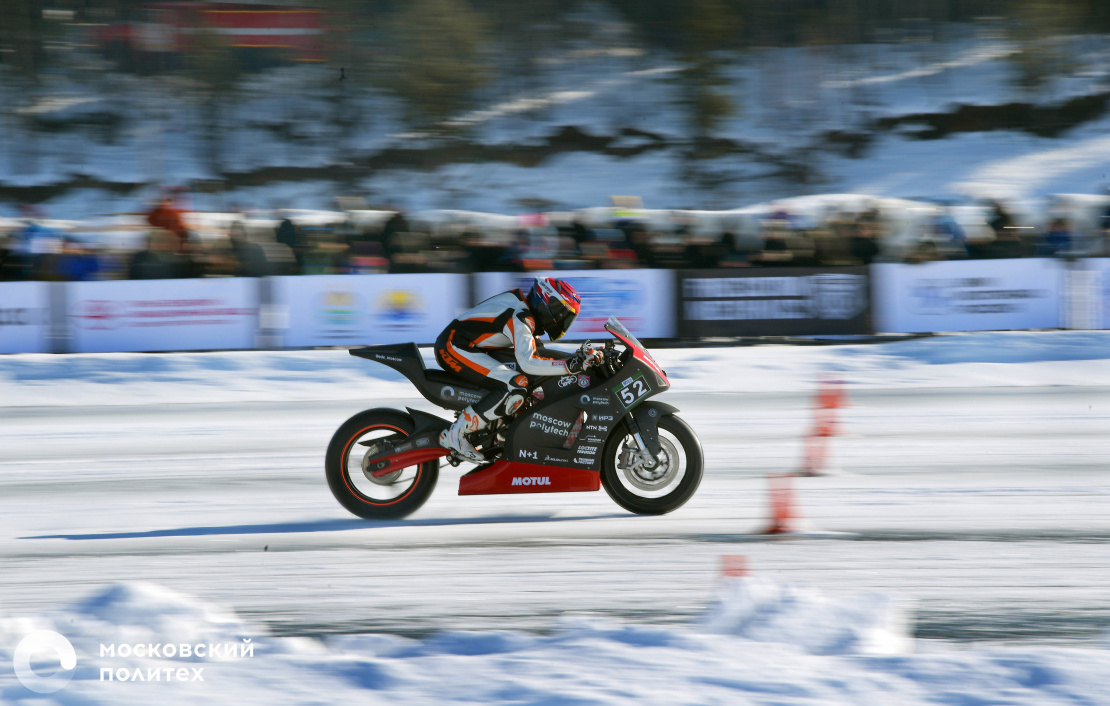
The project team includes engineers, designers, and marketers from various education courses. Over the course of 12 years, the team has created over 10 electric motorcycles, set two speed records, and earned over 12 victories. Currently, the team is finalizing the latest MIG R2 electric motorcycle and testing various systems. The team plans to get to the asphalt and set a new speed record!
The collaboration between the Advanced engineering school of technological leadership and the Porsche Center Rublevsky is aimed at providing practical training for qualified specialists in the motorsports industry and increasing interest in engineering among talented young people. Moscow Polytechnic University students prepare sports cars for competitions and provide technical support on the racetrack as part of a long-term paid internship provided by a partner company.