Moscow Polytech Shifts to New Product Model: Students Developments to Reach Serial Production
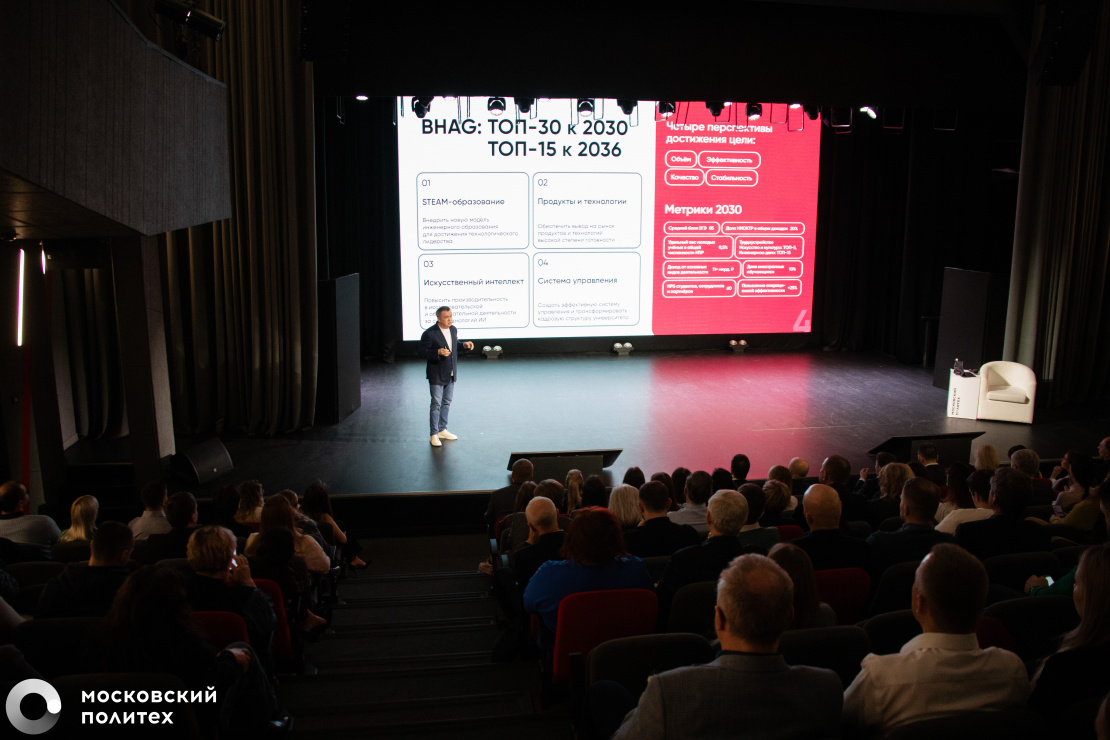
Moscow Polytechnic University is shifting to a product-oriented model of education, in which the educational process, research and development, and industrial production are integrated into a single chain, allowing student ideas to progress from the classroom to serial production. This was announced by the rector of the University Vladimir Miklushevskii at a meeting of the Academic Council while presenting the University's 2025 performance report and its strategy through 2030 and 2036. The strategy was featured by Rossiyskaya Gazeta.
The University is building its strategy as a direct response to the demand of the state and the market. Prime Minister Mikhail Mishustin has outlined eight industries that will define the country's technological leadership through 2035: robotics, digital transformation, new mobility, biotechnology, energy storage, cybersecurity, semiconductors, and nuclear energy. By 2032, these industries are expected to create 12 million new jobs. These areas have become benchmarks for Moscow Polytech, whose product-oriented schools and projects are structured to cover the demand with specific developments and qualified specialists.
"We are building a university that trains specialists capable of shaping new markets and creates developments that are actually implemented in industry. This is a fundamentally different logic: not to transfer a set of knowledge to students, but to guide them through the entire cycle – from design and prototyping to testing and launch into serial production. This is how an engineer demanded by industry is formed, rather than simply a degree holder," said Miklushevskii.
This cycle is based on the STEAM model – an approach in which engineering rigor, digital technologies, and the ability to see a product through the eyes of a human, not just an engineer, work as a single method. Unlike a traditional university, wh ere students are taught individual disciplines, here they learn to solve problems for which no ready-made solutions yet exist.
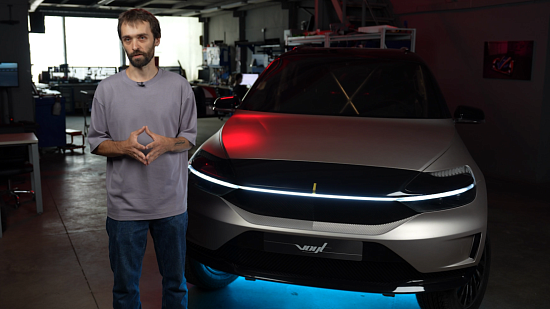
The model is implemented through five product-oriented schools, each built around a specific product area. The Advanced Engineering School of Technological Leadership FDR, focused on autonomous transportation systems and electric mobility, has been operating since 2022; the School of Engineering Design – since 2025; the School of Engineering Chemistry will open in 2026, while the Schools of Manufacturing Technologies and Visual Communications are under development. At the same time, all students without exception acquire competencies in the use of artificial intelligence.
Under the new model, students choose their individual pathway, take part in projects, and create value while studying. Their achievements are recorded not as a set of grades, but as a digital competency profile and a contribution to a specific product. An AI curator supports this journey by tracking competencies, comparing them with labor market requirements, and shaping an individual learning trajectory.
"AI strengthens the faculty. When artificial intelligence handles routine questions, the faculty can focus on what matters most: working with the student on real industrial challenges, transferring engineering knowledge, and providing mentorship. To attract the best young researchers and practicing engineers, we are launching the P.L. Kapitsa Program 2.0 and increasing the salaries of young faculty by 30% starting in September 2026," noted the Rector.
Over the past five years, the average salary of faculty has increased by 1.45 times, while employee salaries have grown by 1.65 times. The University competes for people not with other universities but with IT companies and industry. The effectiveness of this model is confirmed by labor market outcomes: 18 out of 27 academic programs at Moscow Polytech rank among the TOP-10 in the National Employment Ranking, and more than 90% of graduates work in their field of study.
Moscow Polytechnic University is a participant in the "Priority 2030" program. The University's strategic goal is to enter the TOP-30 by 2030 and the TOP-15 by 2036. Measurable benchmarks for 2030 include an average Unified State Exam (USE) score of 85 among applicants, a 20% share of research income, total revenue exceeding 11 billion rubles, a student and partner NPS score of 60, and an international student share of 10%.