Moscow Polytech Develops New Biosensitive Materials for Disease Diagnostics
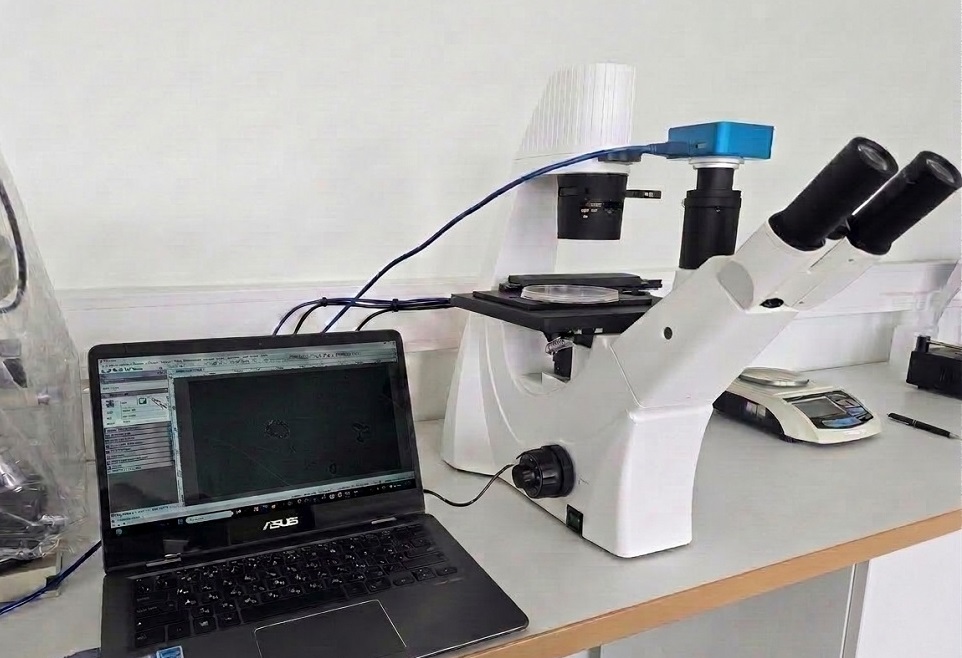
Moscow Polytechnic University is developing biosensitive nanomaterials for the rapid measurement of neurotransmitter levels in the human body. The research is being implemented with the support of a grant from the Russian Science Foundation, provided following the competition "Conducting Fundamental Scientific Research and Exploratory Scientific Research by Small Individual Scientific Groups". The project was featured by the TASS (Russian News Agency).
Neurotransmitters are chemicals through which nerve cells transmit signals to one another. Their concentration in the body is directly related to the development of a number of serious diseases. Low dopamine levels are detected in Parkinson's disease, attention-deficit hyperactivity disorder (ADHD), schizophrenia, and epilepsy. An excess of this neurotransmitter, on the contrary, correlates with heart failure and arterial hypertension. Serotonin imbalance is associated with depressive disorders. However, it is currently impossible to measure neurotransmitter levels rapidly outside a laboratory. Existing methods, including high-performance liquid chromatography (HPLC) and enzyme-linked immunosorbent assay (ELISA), require complex equipment and qualified staff, while the result has to wait for hours.
"We aim to develop materials that are sensitive to dopamine, serotonin, and other neurotransmitters," said Ivan Komarov, Associate Professor and Head of the Research Group. "The ability to monitor neurotransmitter levels quickly will provide deeper and more integral knowledge about various pathologies, including Parkinson's disease, Huntington's disease, and a number of heart diseases associated with impaired concentration of neurotransmitters in the body."
The technology is based on thin films of reduced graphene oxide, on the surface of which aptamers are fixed. Aptamers are short nucleic acid molecules capable of recognizing specific target molecules with high accuracy. When an aptamer binds to a neurotransmitter, the electrical properties of the reduced graphene oxide film, on which the aptamers are attached, change – this change is recorded as a sensor signal. At the same time, the measurement of the signal differs significantly when interacting with the target molecule relative to other molecules. This approach allows for the selective detection of neurotransmitters at extremely low concentrations typical of human bodily fluids. In the future, the researchers plan to develop a compact set of sensors based on these materials. Similar in concept to a glucometer, the device would measure neurotransmitter concentrations instead of blood sugar levels.
The project is designed for two years. During the first year, the research team will develop a method for producing uniform graphene films on flexible polymer substrates and optimize techniques for local reduction of graphene oxide. The second year will focus on aptamer immobilization, the creation and testing of sensors for their response to target molecules, and the determination of key sensor performance parameters, including the minimum detectable concentration of target molecules, the measurable concentration range, etc.
The scientific groundwork for the project was established through the Moscow Polytech P.L. Kapitsa Grant implemented under “Priority 2030”, the state program of strategic academic leadership. Support from the Russian Science Foundation will enable the team to expand the research and develop biosensors for several types of neurotransmitters at once. The project involves Associate Professor Alexey Shchegolkov, Nina Myasishcheva, Head of the Department of Chemical Biotechnology, and fourth-year student Kamilla Rayanova.